Begin With a Design Direction
Every cohesive bathroom starts with a direction. Ask yourself whether you want a clean contemporary look, a warm transitional feel, a classic traditional space or a spa-inspired retreat. Your answer will guide decisions about shape, finish and detail. A contemporary bathroom often uses simple, geometric fixtures, while a transitional design may combine classic profiles with modern metal finishes.
Collect images, samples and materials that reflect your preferences. Look for common threads, such as curved forms, matte textures or warm metals, and let those themes guide your choices across the room.
Choose One Primary Metal Finish
The most effective way to create cohesion is to limit the number of metal finishes. Choose one primary finish for the faucet, shower fixtures, towel bars, lighting and hardware. Popular options include brushed brass, matte black, polished chrome, brushed nickel and unlacquered brass.
Mixing metals is possible, but it requires care. If you combine two finishes, repeat each one in several places so it appears intentional. For example, a brushed brass faucet with brushed brass lights and a brass mirror frame will look deliberate, while a random mix can feel unplanned.
Coordinate Faucets and Shower Fixtures
Faucets and shower systems are among the most visible fixtures in the room. Consider the shape and scale of the faucet in relation to the sink and vanity. A tall, slim spout suits a vessel sink, while a lower profile may be better for an undermount basin. Choose a handle style that is comfortable to use and that complements the cabinet hardware.
Shower controls should match the faucet finish and should be placed for convenient reach. A thermostatic valve helps maintain consistent water temperature, which adds comfort and safety. Coordinating the trim and valve trim ensures that the shower area feels unified.
Select Hardware That Ties the Room Together
Cabinet pulls, drawer knobs and towel bars can reinforce the chosen finish. Pulls in a simple, linear shape suit contemporary vanities, while knobs with softer profiles can complement traditional designs. Keep the size proportional to the drawers and doors so the hardware looks balanced.
Towel bars, robe hooks and toilet paper holders should share the same finish. Installing them at comfortable heights and within easy reach improves daily use as well as appearance.
Mirrors and Lighting
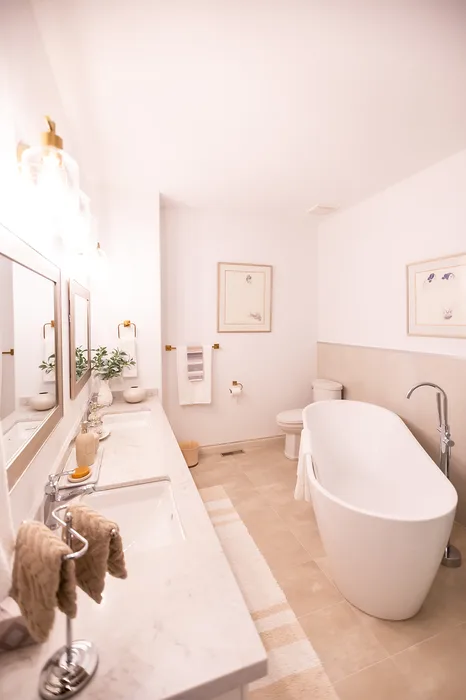
Mirrors and lighting often carry the finish from one part of the bathroom to another. A mirror with a metal frame in the same tone as the faucet creates a visual link. Wall sconces with clean profiles can echo the shape of the faucet or the handles.
Choose lighting with a colour temperature that flatters skin tones and complements tile. Warm neutral light around 3000K is widely used in bathrooms because it creates a calm and flattering atmosphere.
Plan Sinks, Tubs and Toilets
Sinks, tubs and toilets are large pieces that anchor the design. White ceramic remains the standard for most fixtures, as it is durable and easy to clean. Some homeowners choose coloured or matte finishes for a more distinctive look, but these choices should be made early because they affect availability and pricing.
Freestanding tubs and vessel sinks create a sculptural effect, while built-in options maximize space and simplify cleaning. Consider the balance of visual weight when placing large fixtures next to one another.
Consider Material Quality and Longevity
Fixtures and finishes that look good on day one should also hold up over time. Look for finishes that resist tarnishing, corrosion and wear, especially in high-moisture environments. Ask about warranties and the care instructions for each product. Investing in quality key pieces, such as the faucet, shower valve and drain, often delivers the best long-term value.
Read the specification sheets carefully. Confirm the flow rate, the water efficiency and the installation requirements, as these details influence both comfort and compliance with local building requirements.
Build a Sample Board
A sample board is a practical tool for a cohesive design. Gather tile samples, paint chips, metal finishes, countertop pieces and fabric swatches on a single board. Place it in the
bathroom and view it in natural and artificial light. This approach reveals how colours and textures interact and highlights any finishes that clash.
Common Mistakes to Avoid
Overly matching every element can make the room feel flat, so allow some contrast in texture or tone. Another common error is selecting fixtures before confirming the rough-in plumbing location, which can create compatibility issues. Choosing trendy finishes without considering how they will look in five years can also leave the bathroom feeling dated.
Frequently Asked Questions About Bathroom Fixtures and Finishes
Should all bathroom fixtures be the same finish?
Not necessarily. A consistent primary finish is usually best, with limited accents in a second finish. Repeating each finish in several places helps the room look intentional.
What is the most versatile bathroom metal finish?
Brushed nickel and brushed brass are widely versatile because they suit many styles and hide fingerprints better than high-polish finishes.
Do matte black fixtures show water spots?
Matte black finishes can show water spots and fingerprints more readily than some other finishes. Choosing a quality finish and wiping surfaces regularly helps maintain the appearance.
How do I choose a faucet for my vanity?
Consider the sink style, the vanity height and the spout reach. Test the proportions with a sample if possible, and confirm the installation requirements with your plumber.
Can a designer help coordinate fixtures and finishes?
Yes. A designer can build a cohesive palette, check the compatibility of fixtures and coordinate suppliers and trades. Explore our full service home renovation design services or contact our studio to get started.
Creating a cohesive bathroom? Visit our renovation projects page for examples of finishes in real homes, or call +1 778 862 8533 to book a consultation.