Start With the Way You Use the Room
Before choosing a sofa or paint colour, consider how the room will be used. Do you watch television most evenings, host dinner parties or need a quiet reading corner? Do children play here, or is the room primarily for relaxation? These answers determine how much seating you need, where it should be placed and how much storage is required.
Measure the room carefully and mark key features such as windows, doors, fireplaces and electrical outlets on a floor plan. This simple step prevents furniture from blocking pathways or covering important architectural elements.
Furniture Layouts That Work
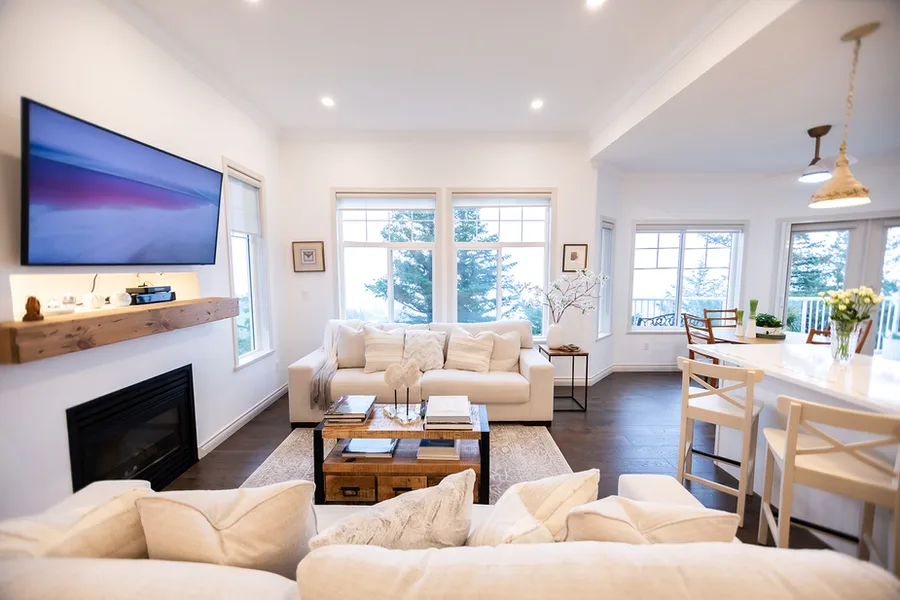
A modern living room often centres on a sofa facing a focal point, such as a fireplace, media wall or view. Allow at least 18 inches between the coffee table and the sofa for comfortable access, and keep walkways at least 36 inches wide where people pass through the room.
Floating furniture away from the walls can create a more intimate conversation area, especially in larger spaces. A rug anchors the seating group and defines the zone. Choose a rug large enough for the front legs of all seating pieces to rest on it, which makes the room feel more cohesive.
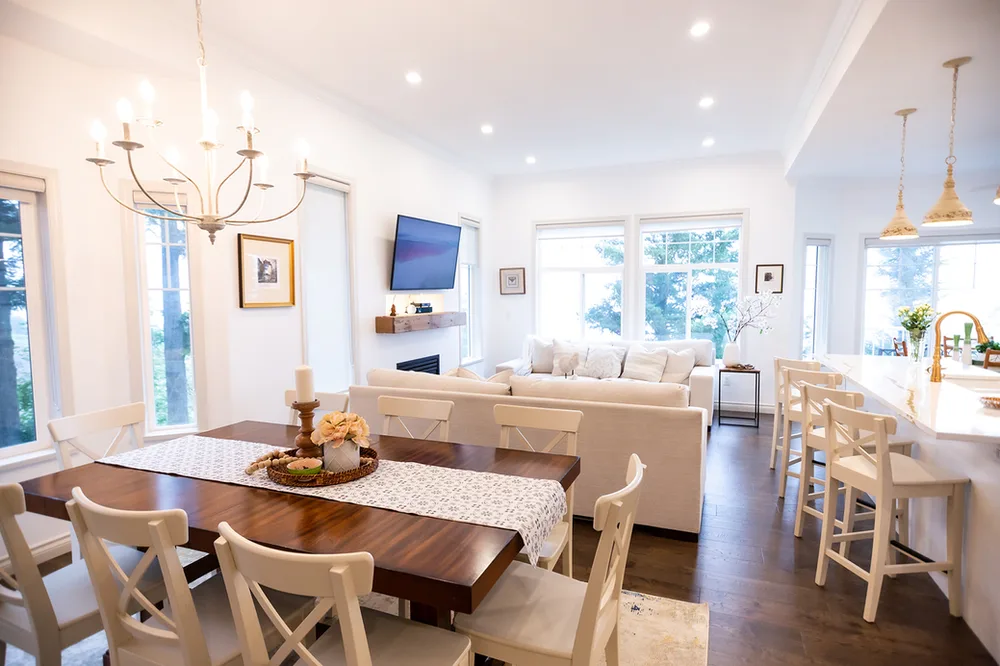
In open-concept homes, a sofa placed with its back toward the kitchen or dining area can act as a subtle divider. Consider the sightlines from each area as you plan.
Choosing a Colour Palette
Modern living rooms often rely on a neutral base with selective accents. Warm whites, soft greys and greige create a calm backdrop, while sand, sage and muted terracotta add warmth. Use the 60-30-10 principle as a guide: about 60 percent of the room in a dominant neutral, 30 percent in a secondary tone and 10 percent in an accent colour.
Test paint samples on several walls and view them at different times of day. Natural light changes colour considerably over a single day, and a shade that looks perfect at noon may appear cooler in the evening.
Furniture Choices and Scale
Scale is critical in a modern room. Oversized furniture can overwhelm a small space, while undersized pieces can make a large room feel empty. A sofa that fits the wall and a coffee table that sits at about two-thirds of the sofa’s length typically look balanced.
Choose upholstery that suits your household. Performance fabrics resist stains and wear, while natural fibres bring texture and breathability. Leather develops character over time and works well with wood and metal accents.
Lighting for Comfort and Mood
Lighting transforms a living room. Layer ambient light from ceiling fixtures or recessed lights, task light from reading lamps and accent light from picture lights or wall sconces. Dimmers allow you to shift between bright daytime use and softer evening atmosphere.
Position floor and table lamps at the height of a seated person’s eye level to create comfortable reading light. Warm bulbs around 2700K to 3000K suit most living rooms.
Textiles and Texture
Textiles soften a modern room and add comfort. Layer throws, cushions and curtains in complementary tones and textures. Linen curtains that hang floor to ceiling create height and let light filter through, while a wool or boucle throw introduces warmth.
Mixing textures, such as smooth leather, woven fabric and natural wood, adds depth without clutter. Keep patterns to a few pieces so the room feels calm.
Decorating With Personal Touches
Art, plants, books and meaningful objects give a living room personality. Hang artwork at eye level, roughly 57 to 60 inches to the centre, and group smaller pieces together to create a cohesive display. Add plants in various sizes to bring life and softness to corners.
Display items that reflect your interests and avoid overcrowding shelves. Negative space around objects is part of modern design and gives each piece room to be appreciated.
Common Living Room Design Mistakes
Placing furniture against every wall can make a room feel disconnected. Using too many small accent pieces can create visual clutter. Neglecting window treatments or lighting can leave the room feeling unfinished. Choosing furniture that is too deep or too low may make the seating uncomfortable for everyday use.
Frequently Asked Questions About Modern Living Room Design
How far should a sofa be from the coffee table?
A distance of about 16 to 18 inches gives comfortable access while keeping the seating group connected.
What rug size works best in a living room?
A rug should be large enough for the front legs of the seating pieces to rest on it. In many living rooms, this means a rug measuring around 8 by 10 feet for a standard seating group.
What is the best paint colour for a modern living room?
Warm whites, greige and soft sand tones are versatile choices. Test samples in the room before committing, because lighting changes the appearance of colour.
How do I make a small living room feel bigger?
Use light colours, keep furniture scaled to the room, choose pieces with visible legs and layer lighting to create depth. Mirrors can also reflect light and extend the sense of space.
Can a designer help me plan my living room layout?
Yes. A designer can create a furniture plan, recommend colours and coordinate lighting and textiles. Explore our interior styling services or book a consultation to discuss your space.
Ready to refresh your living room? See our projects for inspiration or call +1 778 862 8533 to plan your space with our team at Hartley-Robinson Decor & Staging.